
Press & Media
What is a coffee and chicory blend and why is it used?

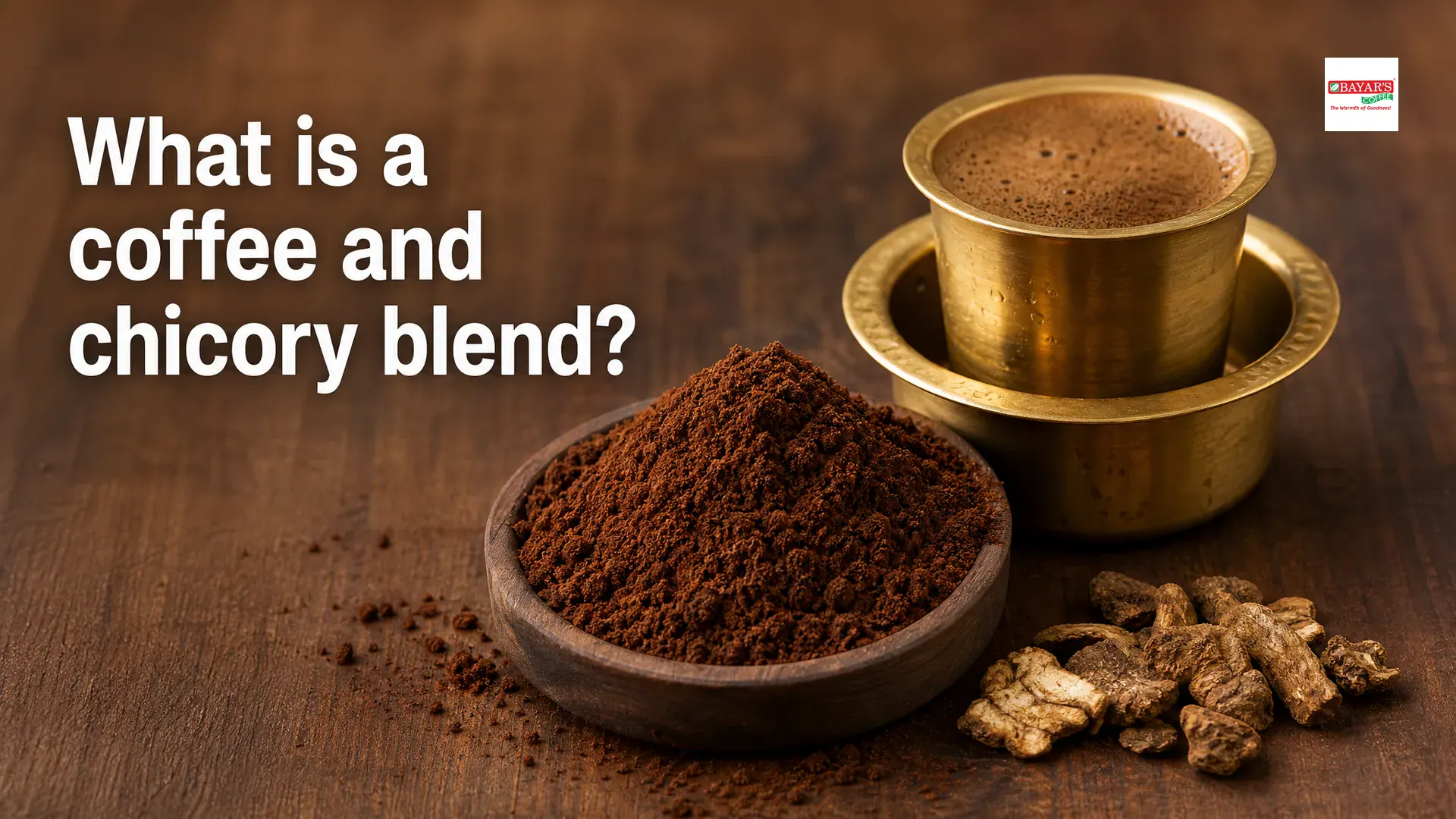
If you have ever picked up a pack of South Indian filter coffee powder, you have probably noticed the words “coffee and chicory blend” on the label. For many households, this blend is the default choice for daily filter coffee. Yet plenty of buyers are unsure what chicory actually is, why it is there, and how it shapes the cup. Bayar’s Coffee, a Bengaluru based coffee manufacturer, offers both blended and pure coffee powders, making this a question worth answering clearly.
Summary
- What is a coffee and chicory blend? – It is ground coffee mixed with roasted, ground chicory root in a defined ratio. In South India, common ratios range from 80:20 to 60:40 (coffee to chicory). The blend is designed for use in a traditional metal drip filter.
- Why is chicory added to coffee? – Chicory adds body, sweetness, and a thicker mouthfeel to the decoction. It also stretches the coffee further, making each pack more economical for daily brewing without sacrificing a full bodied cup.
- Who prefers blended over pure coffee? – Households that brew filter coffee every morning and value a strong, thick decoction with boiled milk typically prefer a coffee chicory blend. Buyers who want brighter acidity and a cleaner coffee taste lean toward pure, chicory free powders.
What is chicory?
Chicory is a plant (Cichorium intybus) whose taproot is dried, roasted, and ground into a fine powder. On its own, brewed chicory tastes earthy, slightly sweet, and carries no caffeine. It has been used as a coffee companion across cultures for centuries, from French colonial blends to the famous New Orleans style coffee.
In India, chicory cultivation is concentrated in parts of Gujarat and Rajasthan. The roasted root is blended with coffee at the manufacturing stage, so the consumer receives a ready to brew powder. Bayar’s Coffee sources and blends chicory at its production facility, controlling the ratio to deliver a consistent flavor profile in every pack.
How chicory changes the cup
Adding chicory to coffee alters three sensory dimensions. First, it increases body. The decoction feels thicker on the palate, which is exactly what a traditional davara tumbler pour demands. Second, chicory introduces a mild caramel sweetness that rounds off the bitterness of dark roasted Robusta beans. Third, it deepens the color of the decoction, giving it the signature dark hue South Indian households expect.
The coffee to chicory ratio determines how pronounced these effects are. An 80:20 blend keeps coffee flavor dominant while adding noticeable body. A 60:40 blend pushes strength and thickness further, producing a heavier decoction that pairs well with generous amounts of boiled milk. Bayar’s Coffee offers multiple ratio options so buyers can match the blend to their household preference.
Pure coffee powder, by contrast, delivers a brighter, more acidic cup with a cleaner finish. It lets the origin character of the beans, whether Arabica, Robusta, or a blend of both, come through without the earthy undertone chicory introduces.
Choosing blended or pure
The decision between a coffee chicory blend and pure coffee powder is not about quality. It is about taste preference and brewing context. For everyday South Indian filter coffee served with hot milk and sugar, a blended powder is the traditional choice. It yields a rich, forgiving decoction that stays flavorful even when diluted.
For those who prefer black coffee, pour over methods, or espresso, pure coffee powder is usually the better fit. Without chicory, the cup highlights the bean’s natural acidity, aroma, and origin notes.
Bayar’s Coffee carries both categories, from coffee and chicory blend powders designed for the metal drip filter to 100 percent pure coffee powders for buyers who want a chicory free experience. Understanding what chicory does, rather than treating it as mere filler, helps you pick the right pack for your morning ritual.
FAQs
1. What is a coffee and chicory blend?
A coffee and chicory blend is ground coffee mixed with roasted chicory root in a set ratio. It is the standard format for South Indian filter coffee powder and produces a thick, full bodied decoction when brewed in a metal drip filter.
2. Why is chicory added to South Indian filter coffee?
Chicory adds body, mild sweetness, and a deeper color to the decoction. It also makes the powder more economical for daily use, which is why most South Indian households have traditionally preferred blended coffee over pure coffee.
3. Is coffee with chicory better than pure coffee?
Neither is objectively better. Coffee chicory blends suit traditional filter coffee with milk, while pure coffee highlights the bean’s natural acidity and aroma. The right choice depends on your brewing method and taste preference.