


Press & Media
What is south indian filter coffee

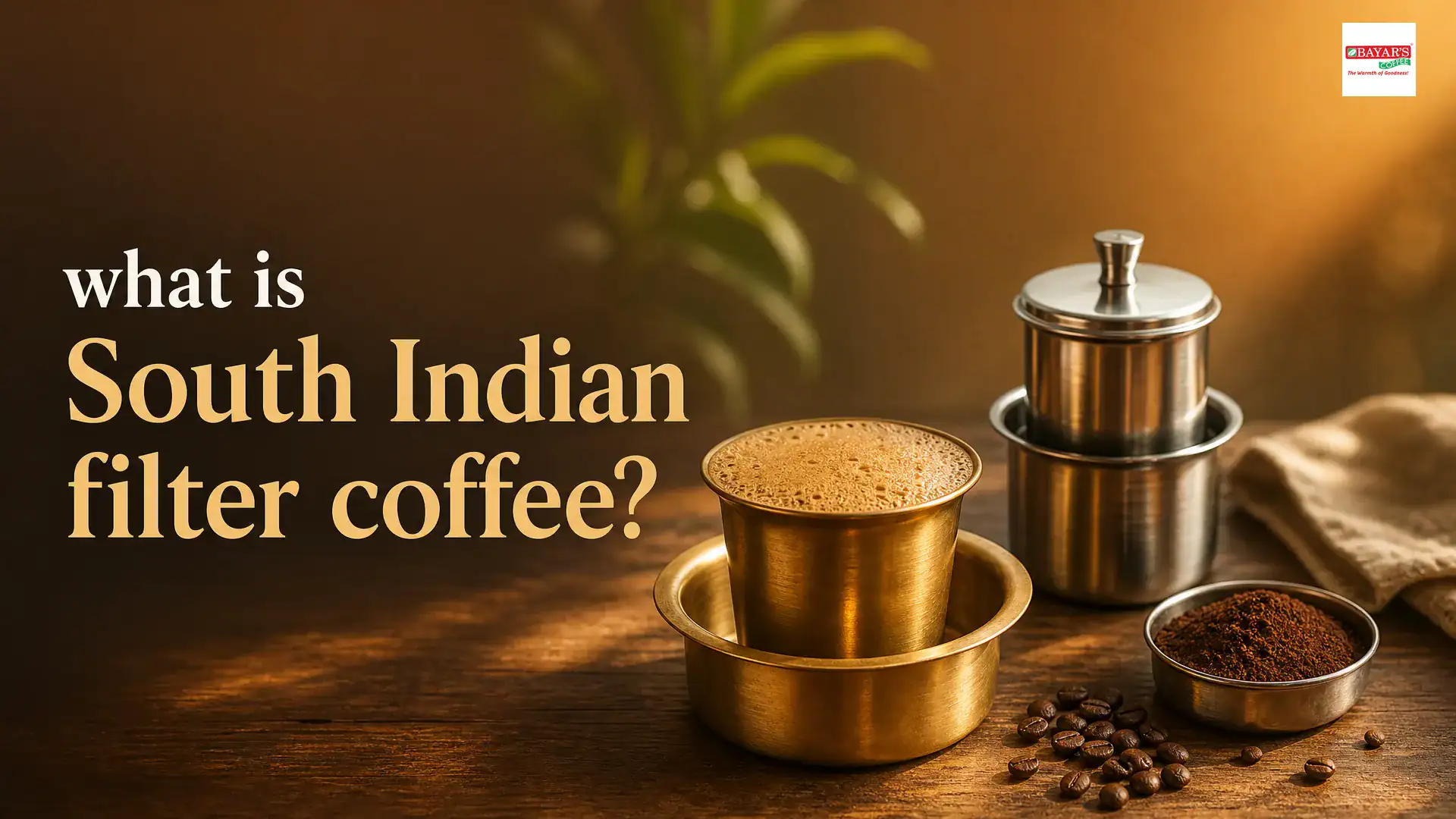
What is South Indian filter coffee and why it matters
Millions of households across Karnataka, Tamil Nadu, Kerala, and Andhra Pradesh start their mornings with a ritual that predates modern coffee culture by generations. South Indian filter coffee, often called filter kaapi or degree coffee, is more than a beverage. It is a cultural anchor. Bayar’s Coffee, rooted in Bengaluru’s coffee heritage, has been part of this tradition for decades, offering freshly roasted filter coffee powder and coffee chicory blends crafted for authentic taste.
TL;DR – Summary
- What is South Indian filter coffee? – It is a strong, aromatic coffee brewed using a traditional metal drip filter. Finely ground coffee powder, often blended with chicory, is packed into the upper chamber. Hot water percolates through it slowly, producing a thick decoction that is mixed with boiled milk and served in a davara tumbler set.
- What beans are used? – South Indian filter coffee typically uses a blend of Arabica and Robusta beans grown on estates in Karnataka, Kerala, and Tamil Nadu. Robusta adds body and strength, while Arabica contributes aroma and mild acidity.
- Why is chicory added? – Chicory root, roasted and ground, is blended with coffee powder to enhance body, add a caramel sweetness, and stretch the decoction. The coffee to chicory ratio varies by household preference, commonly ranging from 80:20 to 60:40.
- How is it different from instant coffee? – Filter coffee is brewed by slow drip extraction, producing a rich decoction with layered flavors. Instant coffee dissolves in hot water and lacks the depth, aroma, and body that define traditional South Indian filter coffee.
Beans, roast, and chicory
South Indian filter coffee begins with the right beans. Estates across Coorg, Chikmagalur, Wayanad, and the Nilgiris supply Arabica and Robusta coffee that forms the backbone of every blend. Robusta, grown widely across South Indian estates, delivers a bold body and higher caffeine content. Arabica contributes smoothness and floral notes.
Roasting is typically a medium to dark profile. This brings out deep, chocolatey undertones and a strong aroma that fills the kitchen. After roasting, the beans are ground to a fine consistency suited for the metal filter’s slow drip process.
Chicory is the defining addition. Roasted chicory root, when blended with coffee powder, creates a thicker decoction with a slightly sweet, earthy finish. Bayar’s Coffee offers both coffee and chicory blends and pure coffee options, letting households choose the strength and flavor profile they prefer.
How the filter works
The traditional South Indian coffee filter is a two chamber stainless steel device. The upper chamber holds the coffee powder, pressed down with a perforated plunger. Boiling water is poured over the powder and the lid is closed.
Over 10 to 15 minutes, water drips through the grounds into the lower chamber, producing a concentrated decoction. This slow extraction is what gives filter coffee its signature richness. No paper filters or machines are involved.
To serve, a few tablespoons of decoction are mixed with hot, boiled milk and sugar to taste. The coffee is then poured back and forth between a tumbler and a wide bowl called a davara. This aerates the drink, cools it slightly, and creates a frothy top layer.
Cultural role in daily life
Filter coffee is woven into the social fabric of South India. It marks the start of the day, accompanies conversations with guests, and anchors afternoon breaks. In many households, the filter is set before dawn and the decoction stays ready through the morning.
The davara tumbler ritual is not just functional. It is a gesture of hospitality. Offering filter kaapi to a visitor signals warmth and welcome. This cultural depth is why South Indian filter coffee remains distinct from global coffee trends.
Bayar’s Coffee, with its Bengaluru roots, sources beans from South Indian estates and roasts them using precision equipment to preserve the traditional flavor profile that households expect. Their filter coffee range, available online and across retail outlets, is designed to help anyone, whether in Chennai or Delhi, recreate an authentic cup at home.
South Indian filter coffee is a tradition built on simple elements: quality beans, a patient brewing method, and a cultural reverence for the morning cup. Whether you prefer a coffee chicory blend or pure coffee, the experience starts with choosing the right powder and letting the filter do its work. Bayar’s Coffee can help you find the blend that matches your household’s taste.
FAQs
1. What is South Indian filter coffee made of?
It is made from finely ground coffee powder, often a blend of Arabica and Robusta beans, sometimes mixed with roasted chicory. The decoction is brewed using a metal drip filter and served with boiled milk.
2. Why is chicory added to South Indian filter coffee?
Chicory adds body, a mild caramel sweetness, and a thicker consistency to the decoction. It also extends the coffee, making each brew go further. Bayar’s Coffee offers blends with varying coffee to chicory ratios.
3. How is filter coffee different from instant coffee?
Filter coffee is brewed by slow drip extraction through ground coffee, producing a rich, layered decoction. Instant coffee dissolves directly in water and lacks the depth, aroma, and full body of traditionally brewed filter coffee.


